
This is the second edition of Smooth Conversions. Its purpose is to reduce client acquisition costs (CAC) by giving your clients a truly frictionless experience.
Over half a trillion dollars is wasted each year due to digital marketing inefficiencies. Our goal is to cut that waste in half by identifying a simple, repeatable path that any business can follow.
In the previous edition, Ads with Highest ROAS Have These Key Elements, we highlighted that personalization is the key.
With personalization, you can fine-tune messaging, optimize the user experience, and check more boxes on the path to smoother conversions.
But how do you know what to personalize in the user experience?
Most businesses rely on guesswork:
“My potential clients are buying from my competitors. My product is cheaper and better—they’ll naturally choose me.” Or, “They have a problem, I have a solution—they should buy.”
That’s not how it works.
Your competitors are just one click away.
You need far more than a ‘better, cheaper’ product; you need compelling reasons to attract users and an exceptional experience to convert them into loyal customers.
Unfortunately, most startups don’t deliver on this.
That’s why businesses bleed money on ads and inefficient marketing strategies.
Bounce rates stay high, response rates remain low, ads attract poor-quality clicks, prospects never turn into leads, and even after a significant investment, customers keep ghosting.
So, what’s the real game-changer?
It’s data—specifically first-party data, which gives you the most accurate insights.
It’s all about the data
According to research by Google, brands that leverage first-party data for key marketing functions achieve up to a 2.9X revenue lift and a 1.5X increase in cost savings.
If you’re in the corporate world, you’ve probably seen gigabytes of data being collected, stored, cleaned, and used as leverage.
For decades, corporations have been using data to deliver fully customized, personalized experiences—and that’s why they generate billions in revenue.
For example, while researching Jeff Bezos for my newsletter, Founders Playbook, I explored every angle of his approach. So, I watched a documentary chronicling Amazon’s journey.
Amazon’s mission was to be Earth’s most customer-centric company. And they achieved it by harnessing data.
When they first started analyzing user behavior, the results shocked them.
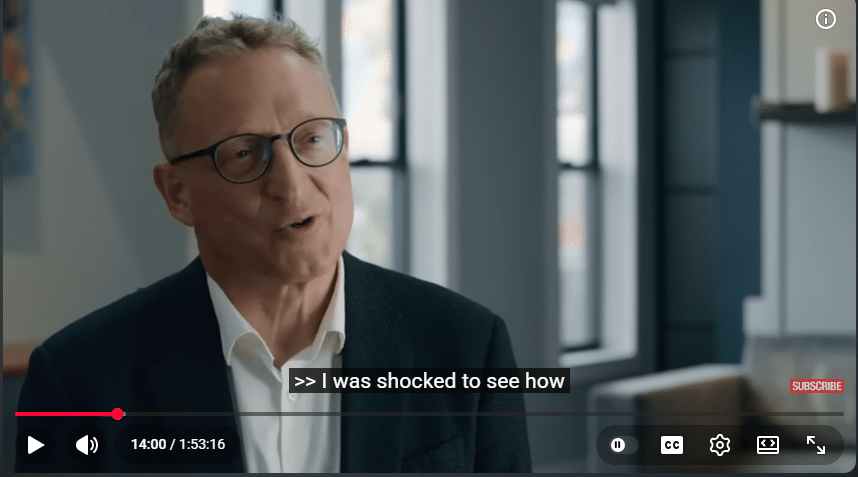
I was shocked to see how predictable people are. Chief scientist Andreas Weigend
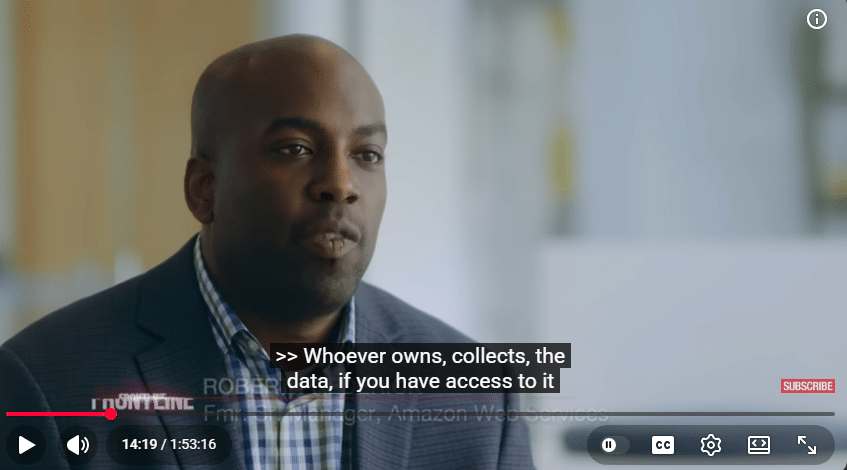
Whoever owns, collects,the data, if you have access to it and rights to data, then you are king. It’s all about the data. Everything. Robert Frederick (Fmr. Manager for the Amazon Web Services)
And that’s what Shawndra Hill, a principal scientist at Facebook and former Principal Researcher at Microsoft also tells us that when you have data, people are so predictable.
In fact, every major company today relies on data.
Google delivers personalized search results; Facebook, Instagram, TikTok, and YouTube serve personalized content; and since the AI boom, nearly every large company is providing AI-powered personalized experiences at scale.
For example, an e-commerce store recommends products tailored to you, a health app offers personalized suggestions—the list goes on.
And there’s a reason for this.
McKinsey reports that 71% of users expect personalized experiences. Yet when brands fail to deliver, 50% of loyal customers are open to switching.
AI has amplified this trend, making the market even more competitive.
For companies with multimillion-dollar marketing budgets, collecting and leveraging first-, second-, or third-party data is manageable
But for startups, data is a headache.
So, what can startups do?
Many don’t even have the basic building blocks of data in place.
If you’re a business owner, from where can you collect meaningful data to shape your strategy?
That’s where indirect audience and market research comes in.
In indirect research, you gather data manually from the platforms where your audience hangs out and shares their thoughts freely, without asking them directly.
Studies show that when you ask people direct questions, they rarely answer accurately.
“People don’t think what they feel, don’t say what they think and don’t do what they say” – David Ogilvy.
Indirect research lets you understand what’s truly on their minds.
Until you know what your potential clients really want, you can’t deliver enough value.
Michael Skok a founding partner at Underscore VC says, points out that most startups fail is their inability to provide enough value.
He emphasizes that users ultimately decide perceived value based on their actual experience.
With the right data, you can strategize every move based on real expectations and demands, creating an elevated experience that naturally leads to smooth conversions.
Audience research doesn’t have to cost tens of thousands of dollars. but it can save you tens of thousands.
To write truly personalized copy, I often spend 10–20 hours on audience and market research, which provides deep insights into the topic.
Research guides all business decisions
For a startup, 100 hours of focused research is enough to collect data that can guide nearly every business decision.
You don’t need to run surveys, send questionnaires, or meet one-on-one with potential clients. Most of this can be done digitally to collect your first-party building blocks.
Through this research, you’ll understand:
- Their expectations
- Their objections
- Their pain points
- How they speak
- How they react to different angles
- Which words truly resonate
- How they identify themselves
…and much more.
This is your first-party data, the fuel that helps you remove friction, eliminate objections, and optimize conversions.
It will help you:
- Define your brand positioning and value proposition
- Create personalized ads, landing pages, and blog content
- Understand what type of social proof resonates with your audience
- Determine the optimal UI/UX for your product
- Identify new features your users actually want
- Pinpoint the primary objections preventing purchases
In short, it provides insights that shape your overall marketing strategy and business decisions, allowing you to make moves with confidence rather than guesswork.
It saves a ton of money while giving you a competitive edge.
With data less becomes more
For instance, over 360 billion emails are sent every day but only a fraction get responses. The rest end up in spam, are deleted, or never even opened. Because they’re simply not relevant.
Professor Tom O’Toole defines personalization as delivering the right message to the right customer, at the right time, through the right channel.
Personalization pioneer Mark Abraham adds that most people who seem frustrated or angry are often just not being heard.
Now imagine having a deep understanding of your customer, hearing them talk to their friends about their problems and your solutions. When there are no barriers, they are open, and you can use that insight to eliminate friction across their entire experience.
Of course, psychology plays a huge role but as Professor Michael Skok notes, 90% of the time, business success comes back to understanding the customer.
It has become the norm to rely on volume to get results but that’s not because it’s the best approach. It’s because most businesses haven’t earned quality attention.
Gary Halbert, an iconic marketer, emphasized that the first step should always be to capture quality attention.
But you can’t do that without personalization and relevance.
Once you deliver that experience, as Mark Abraham says, less becomes more.
You don’t need to reach 33 million businesses to land a few clients; you just need to give a few potential clients a truly remarkable experience, and they will become loyal customers.
PS: In the following editions, we’ll use real-time data collected from research to show how insights can help at every stage of the funnel, removing friction and maximizing conversions.
PPS: It’s Ramadan—a month when we fast from sunrise to sunset. During this time, my publishing schedule may be slightly slower than usual. That said, I’m still researching, learning, and preparing behind the scenes.